The Nick Test: why growth fails before it begins.
„We need to grow“ — everyone nods, everyone means something different. The Nick Test surfaces the silent disagreement in your leadership team in 20 minutes, before it hardens into silos.
In short: Agreement without precision costs more than open disagreement. „We need to grow“ is rarely one shared decision — it’s five different ones, because growth isn’t an amount but a direction, and four times out of five it doesn’t mean „more“. In twenty minutes, the Nick Test reveals where your leadership team actually places the company: each person marks two crosses in silence, revealed only afterwards. The gap between them is the real diagnosis.
Your leadership team agrees. Just not on what.
A leadership team sits together. Someone says the sentence everyone expected: „We need to grow.“ Everyone nods. The nodding is the problem.
The question didn’t come from me — it came out of a Growth Circle session: How do we actually align before we set off? It hits what stays unresolved in almost every growth effort. Not the goal. Not the plan. The shared answer to where you actually stand.
01 · Growth is not an amount
„We want to grow“ — and right away comes the question of how much. It sounds reasonable and still leads you astray every time, because it treats growth as an amount. Growth is not an amount but a direction — and which one is right depends on where you stand.
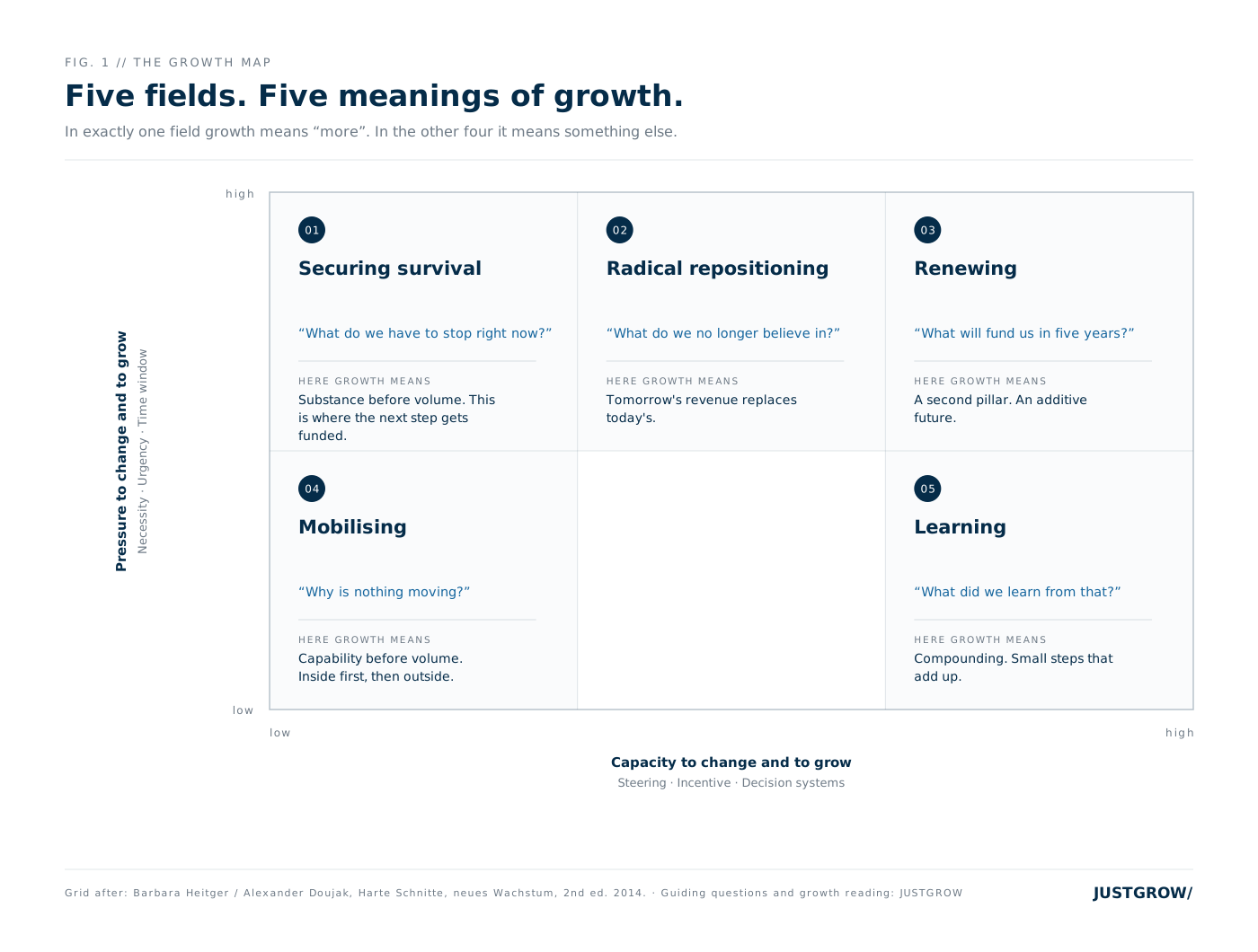
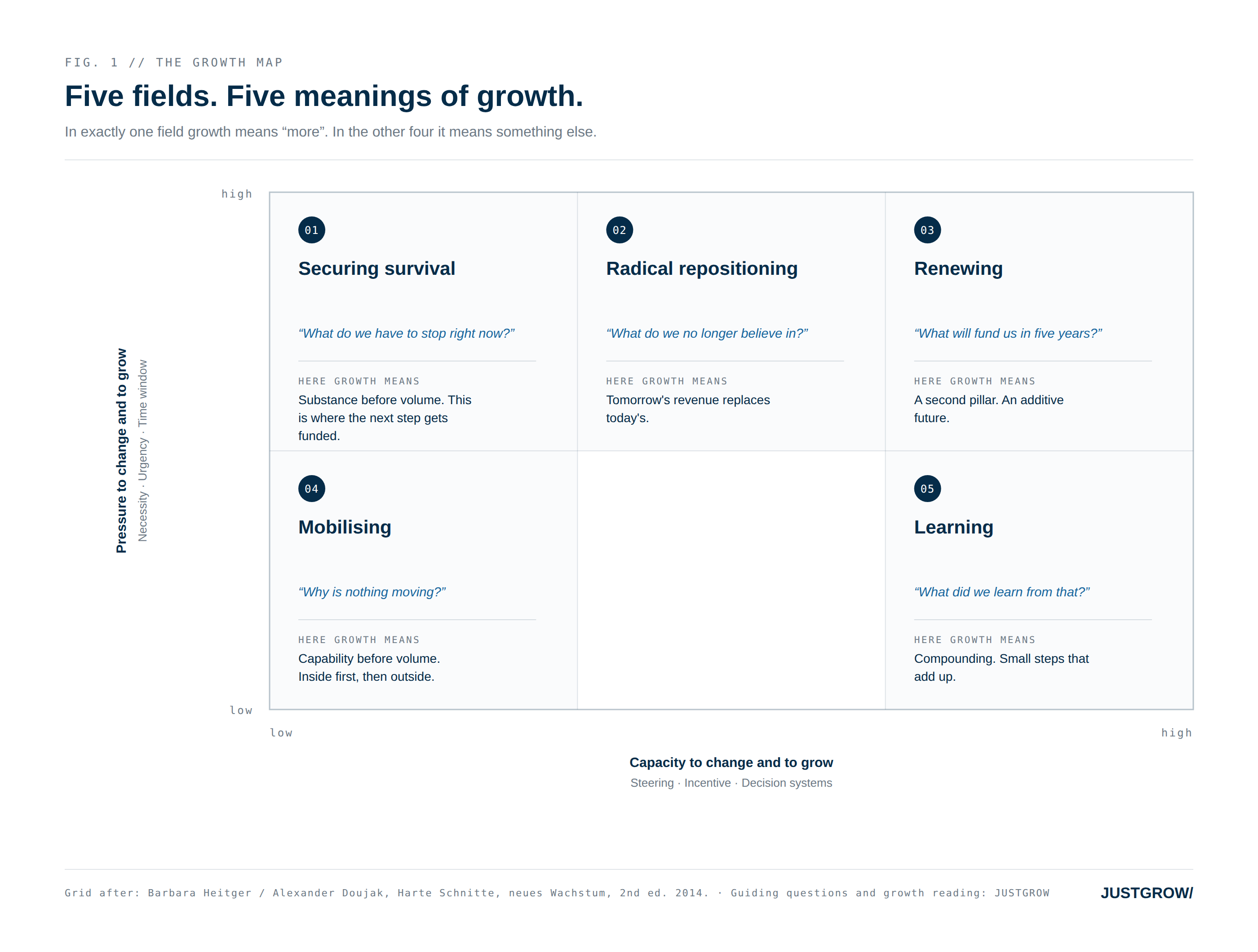
Fig. 1 — Five fields. Five meanings of growth.
Two axes decide it. How strong the pressure is, measured against your numbers and the time you have left. And how well your company can carry growth at all — not as a matter of mood, but concretely: who decides what? Does everyone work from the same numbers? And what are the goals actually pulling towards?
That gives you five fields — and in exactly one of them growth means „more“. Whoever renews builds a second pillar that returns nothing for the first year or two. Whoever mobilises grows inward first. Whoever secures survival finances the next step rather than starting it. Five meanings of the same word, and each demands a different kind of leadership.
02 · What growth does to your steerability
Here comes the part almost no one plans for. Every growth step makes a company more varied: a second product, another country, a new customer group. And more variety means, at first, less steerability — plainly: no one has the overview any more, and it’s no longer clear who decides what. Unless the systems grow with it. In practice they almost never do.
Growth buys variety. You pay for it in steerability.
Steerability means decisions land reliably where they belong — clear responsibilities, shared numbers, one set of goals. More variety erodes it, unless the systems grow with it.
That’s why the second growth step is harder than the first. Not because the market got tougher — but because the company is less steerable than the one that took the first.
There are two ways to get there, and they differ not in size but in whether you notice them. The jump has a date: on the day of a closing you have two sets of controls, two cultures, unresolved responsibilities. Because the loss is dated, it also gets organised. The other way has no date. There the same thing slips away over eighteen months, without a single day on which anyone has to look. I call that the drift.
Jump = a loss of steerability with a date. Drift = the same loss without one.
| Jump | Drift | |
|---|---|---|
| Trigger | a dated event (closing, merger) | gradual, over months, no date |
| Visibility | organised, because it is dated | unnoticed, because no one ever calls a halt |
| Typical case | closing day: two systems, two cultures | 18 months: a service arm + two new countries + a new channel |
| The clock | runs visibly on its own | you have to set it yourself |
A plant engineering firm I know did three things in eighteen months: built a service business, opened up Austria and Switzerland, launched a second sales channel. Each one right on its own, each cleanly signed off. Today there are four contribution-margin calculations, three pricing models — and no one can say which customer is profitable. No one did anything wrong. No one decided the whole.
That is exactly the drift: the sum is the problem, and no one owns the sum.
03 · What that means for leadership
A closing starts a clock everyone sees: the first hundred days, bank meetings, a plan with a date. No one needs convincing that time is running. With the drift there is no starting signal — and so no shared sense of time. Management has to make it uncomfortable itself — and against a company where everything looks fine.
With the jump the clock is visible. With the drift you have to set it yourself.
How do you know it’s time? By three questions, answered in ten minutes:
- Do two units really work out „margin“ the same way — or does each do it differently?
- How many key positions are filled on an interim basis?
- How often, in a week, does a decision land on your desk that already has an owner?
If you hesitate on all three, the diagnosis is made.
The counter-move is to reclaim control. Concretely, four things:
- Clear responsibilities — who decides what without checking back.
- Shared numbers — everyone works from the same definitions.
- One set of goals instead of several side by side.
- Filled key positions instead of interim cover.
That holds after three organic growth steps just as it does after a merger. Reclaiming control isn’t tidying up. It’s the precondition for the next step.
This work brings in no revenue and is never celebrated. Growth gets budgeted, the organisation behind it does not: grow without planning to build out the systems, and you grow on credit. Leadership pays the interest later — perhaps only the next generation does. And there’s a consequence few like to hear: when responsibilities are genuinely clear, fewer decisions land on the owner’s desk. That is precisely the point of the exercise — and precisely why it’s so reliably left undone.
04 · The Nick Test
So at the start there is no roadmap, but an assessment — one you don’t discuss, you set it separately. The Nick Test is a silent individual assessment instead of a discussion: each member of the leadership team marks, separately and without conferring, where the company stands — revealed only afterwards. Back to the plant engineering firm, a management team of five. We asked each of them to mark, quietly and for themselves, where they saw the company. Only then did we reveal.
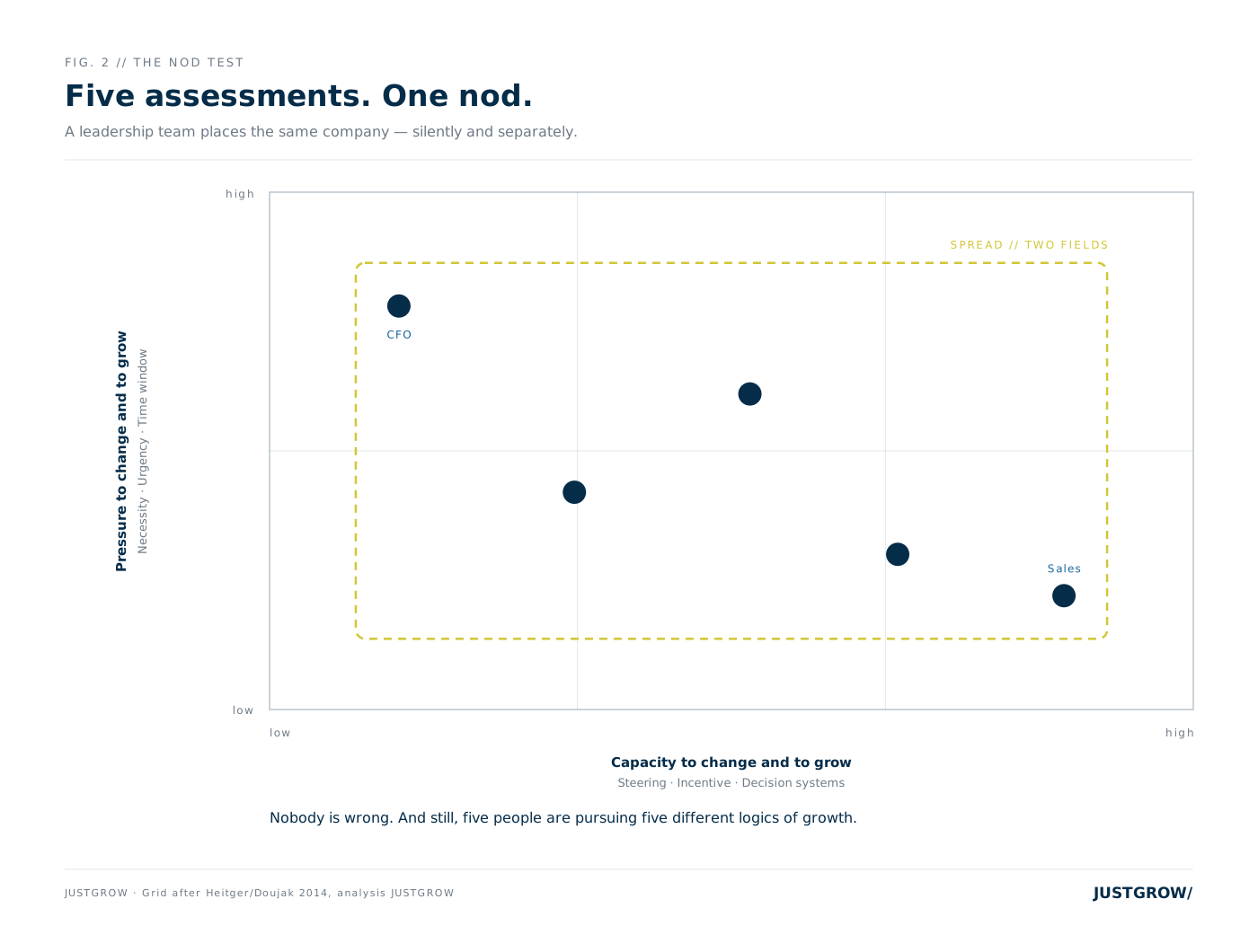
Fig. 2 — Five assessments. One nod.
The CFO placed the company where survival is at stake. The head of sales placed it where learning is business as usual. Two fields apart — between two people who have sat in the same meetings for four years. Neither was wrong: one saw the margin no one could work out any more, the other the pipeline in two new countries.
And here is where the real damage begins. Whoever places the company differently leads differently — inevitably, not out of negligence. One pushes, the other brakes, both rightly from their own point of view. After two or three quarters these are no longer differences of opinion but areas with their own logic: sales runs expansion, finance runs crisis, and in between people wear themselves out over who is right.
Silos rarely come from malice. They come from no one having clarified which kind of growth is actually in play. (How they take hold despite full calendars is in Silos despite meetings.)
Two qualifications, so the sentence doesn’t claim more than it can. First: the other sort exists too — clarified, but not accepted. That’s not a placement problem but a leadership one, and it only begins once the question is answered. Second: don’t confuse silos with sensible differentiation. A service business may sit in a different field from the core — the map applies per unit, not per company. The only difference: differentiation is decided, a silo has just happened. What is decided you can finance; what has just happened you pay for without noticing.
With real disagreement, at least someone decides deliberately. With false agreement the same money and the same key people pull in opposite directions. Wrong can be corrected. Contradictory cancels itself out.
The obvious objection: „And if we can’t agree?“ Open disagreement is cheaper than false agreement, but more expensive than a decision. Disagreement needs an expiry date — set beforehand, not after.
05 · What you can do this week
Twenty minutes in your next management meeting. Two axes on a flipchart, the fields unlabelled. Each person marks, silently and for themselves, two crosses: Where do we stand today? and Where do we need to be in twelve months? Reveal only once everyone has marked — otherwise the room lines up behind whoever speaks first.
One rule that matters more than the exercise itself: staff the room by influence, not by org chart. Anyone who regularly overturns decisions or calls division heads directly belongs at the table — even if they no longer hold an operational role on paper.
Then look not at the points but at the gap — and ask two questions: Who can lead this? And: What does it cost — in money, in the time of our key people — and what does that person then stop doing? A path without a price is a hope, not a strategy.
Don’t expect the answer to come at once. Watch instead who speaks first — and whether anyone says something different afterwards. If not, you haven’t measured the assessment, you’ve measured the pecking order. And when the two crosses sit side by side, you also see why „more“ is so rarely the answer: in four of five fields growth means something else.
The line to remember
Agreement without precision costs more than open disagreement.
Next step
Do the silent self-check first — on your own, in five minutes: the Growth Compass walks you through the same seven questions and shows you your own reading before the round begins. Then settle it as a team: where your company stands today and where it needs to be in twelve months — agreed in the leadership team, so the answer can travel down the organisation too. Twenty minutes, set in silence, revealed afterwards. If you’d rather not facilitate that alignment on your own, that’s exactly the heart of leadership-team alignment.
Part 2 of this edition covers the same mechanism for acquisitions and mergers: Buy & Build — you buy faster than you can lead.
Source: Barbara Heitger / Alexander Doujak, Harte Schnitte, neues Wachstum. 2nd revised edition, Redline/Ueberreuter, Frankfurt/Vienna 2014. Axis labels, guiding questions and growth reading: JUSTGROW.
Frequently asked questions
What is the Nick Test in a leadership team?
The Nick Test is a silent individual assessment instead of a discussion: each member of the leadership team marks, separately and without conferring, where the company stands today and where it needs to be in twelve months. It is revealed only afterwards. The gap between the marks shows whether the agreement is real or just a shared nod.
Why is false agreement more expensive than open conflict?
With open disagreement, at least someone decides deliberately and the direction is clear. With false agreement, the same money and the same key people pull in opposite directions without anyone naming it — and the effects cancel out. Wrong can be corrected; contradictory quietly cancels itself out.
What is the difference between a "jump" and a "drift" in growth?
A jump is a loss of steerability with a date — a closing or a merger; because it is dated, it gets organised. A drift is the same loss without a date: over one to two years, individually sound decisions add up to a whole that no one owns.
How do we tell whether our company is losing control?
Three questions are enough: do two units really work out „margin“ the same way? How many key positions are filled only on an interim basis? How often does a decision land on your desk that already has an owner? If you hesitate on all three, the diagnosis is made.
How do we run the Nick Test in practice?
Twenty minutes in your next leadership meeting: two axes on a flipchart, the fields left unlabelled. Each person silently marks two crosses — where we stand today, where we need to be in twelve months. Reveal only once everyone has marked. Staff the room by influence, not by org chart.