Mini-Tool: The Big-3 Priorities Canvas.
A single A4 canvas you fill in with your team in 25 minutes, and it carries you through a whole quarter.

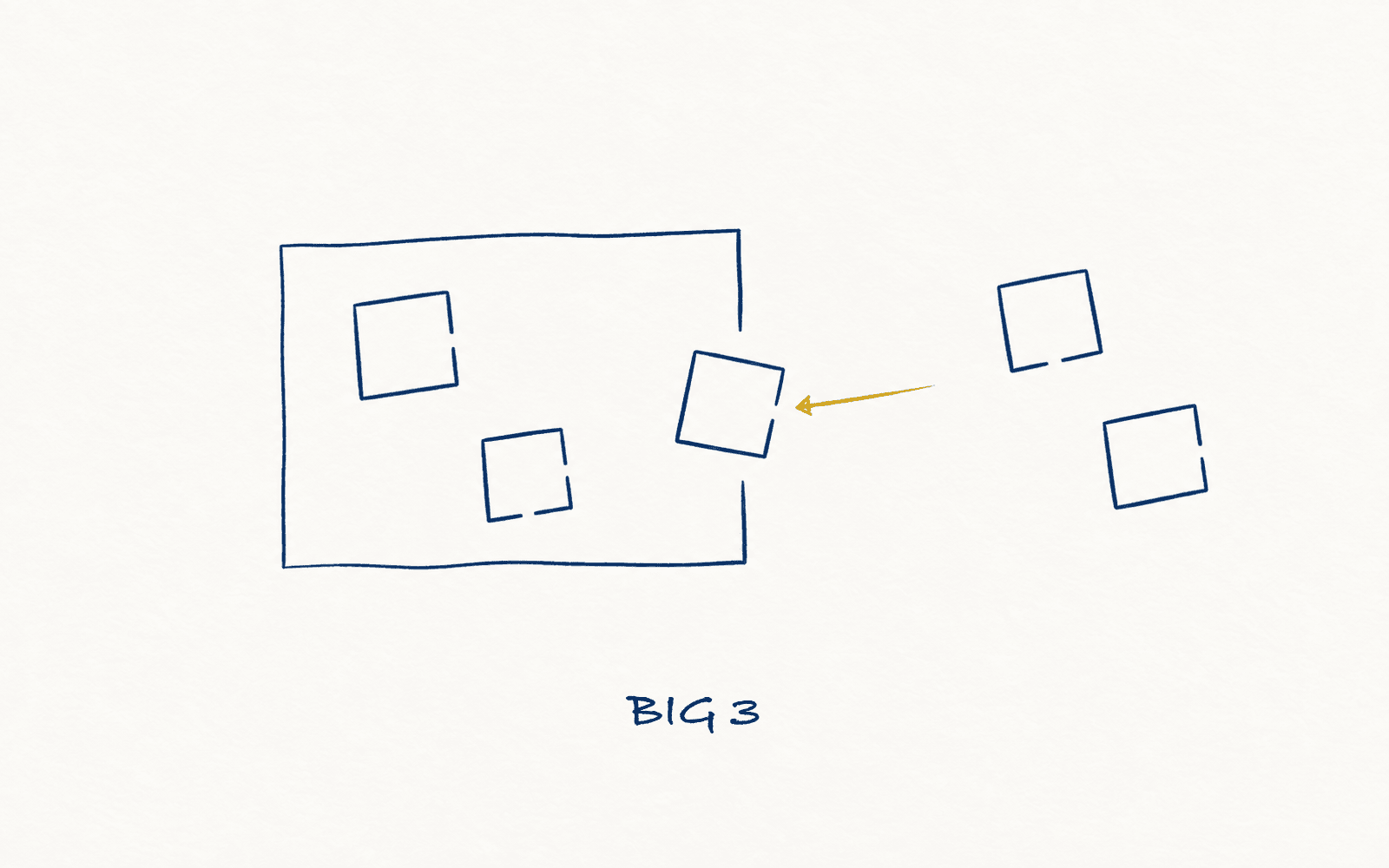
Three columns. One priority, one owner, one Definition of Done each. On the back: six diagnostic questions the workshop lead asks before you start filling it in.
Three priorities means actively deciding what you’ll stop doing.
What this canvas is good for
- Quarterly kickoff in the leadership team
- A reset after a strategy offsite
- Handing a new function to a new owner
- Sharpening decisions when the list of initiatives gets too long
How to use it
25 minutes. Four steps:
- Silent list (5 min): everyone writes their own top 3, separately.
- Sorting (10 min): the lists are merged, and the ones named twice move up.
- Owner choice (5 min): exactly one person per priority.
- Definition of Done (5 min): what counts as “done” at the end of the quarter?
PDF, 1 page (front and back), free.
Frequently asked questions
How do I fill in the Big 3 Priorities Canvas?
In four steps and 25 minutes. First everyone notes their own top three in silence (5 minutes). Then the lists are merged and anything named more than once is prioritised (10 minutes). Next, each priority gets exactly one owner (5 minutes). Finally you define what counts as achieved at the end of the quarter (5 minutes).
Who should be in the room?
The full leadership team. The first step is deliberately silent: everyone writes separately before anything is compared. Start with discussion and the room follows whoever speaks first, so the canvas measures rank rather than judgement.
Why exactly three priorities and not five?
Because three force a decision and five do not. Three priorities means actively settling what you stop doing. A longer list lets you keep everything and postpone the choice, and that is where the execution gap starts.
What belongs in the Definition of Done?
A verifiable state at the end of the quarter, not an intention. Not what will be done, but how everyone will recognise it is achieved. Without that sentence you end up with as many readings as participants, and the priority rolls into the next quarter.
What is the canvas good for, and what not?
It fits a quarterly kickoff with the leadership team, a reset after a strategy offsite, handing a function to a new owner, and any moment when initiative lists grow too long. It does not replace a strategy: it sharpens the selection inside a direction that has already been decided.